

Abstract: Large language model (LLM) serving is fundamentally constrained by GPU memory capacity and bandwidth. While model compression can alleviate these constraints, practical system-level speedups are frequently hindered by the computational overhead of decoding and data movement. This talk explores a compression-centric paradigm for efficient LLM serving, highlighting two synergistic systems: SpInfer and ZipServ. We demonstrate how hardware-aware format co-design bridges the gap between theoretical compression and practical acceleration. First, SpInfer optimizes sparsified LLM serving by redesigning sparse data structures to minimize indexing overhead, unlocking the efficiency of unstructured sparsity on GPUs. Second, ZipServ extends this philosophy to bit-exact inference via lossless compression, enabling on-the-fly decoding that strictly aligns with Tensor Core execution to eliminate redundant memory traffic. Ultimately, this talk illustrates that by co-designing compression formats and execution pipelines with GPU architectures, compression transitions from a mere storage-saving technique into a core systems-level optimization principle that simultaneously minimizes memory footprint and accelerates LLM inference.
Biography: Dr. Xiaowen Chu is a Full Professor and Head of the Artificial Intelligence Thrust at The Hong Kong University of Science and Technology (Guangzhou). He has been the Acting Head and Head of Data Science and Analytics Thrust at HKUST(GZ) during 2023-2025. He received his Bachelor's degree from Tsinghua University and his Ph.D. from The Hong Kong University of Science and Technology. His research focuses on high-performance computing, machine learning systems, and distributed systems. He has received seven Best Paper Awards at international conferences, including EuroSys 2025 and INFOCOM 2021, and Distinguished Paper Award of ICDCS 2025. Dr. Chu has been recognized multiple times in the Stanford University World’s Top 2% Scientists List. He serves (or has served) as an Associate Editor or Guest Editor for IEEE Transactions on Cloud Computing, IEEE Transactions on Network Science and Engineering, IEEE Internet of Things Journal, IEEE Transactions on Big Data, IEEE Network, and IEEE Transactions on Industrial Informatics. He has served as an area chair for NeurIPS, ICML, and ICLR. He was the TPC Co-Chair or General Co-Chair of IEEE MetaCom 2025, IEEE/ACM IWQoS 2024, BigCom 2023, IEEE GreenCom 2022, IEEE HPCC 2021, IEEE DSS 2020, EAI QShine 2019, etc. He is a Fellow of IEEE and AAIA.

Abstract: Over the past two decades, artificial intelligence has advanced at an
extraordinary pace. Breakthroughs in Deep Learning, Generative Adversarial
Networks, Transfer Learning, and Large Language Models have not merely
accelerated progress—they have fundamentally reshaped how we live, work, and
make decisions. Nearly every sector has felt the impact: education, healthcare,
aerospace, manufacturing, national security, e-commerce, and the arts have been
transformed in ways difficult to imagine just a generation ago.
Yet with these achievements come serious responsibilities. Whose data trains
these systems, and whose voices are missing? How do we protect individual
privacy in a world where every digital interaction leaves a trace? And most
urgently—how do we ensure that as AI systems grow more autonomous and
consequential, humans remain meaningfully in control of critical decisions?
This talk offers a concise overview of AI, Machine Learning, and Deep
Learning—where the field has been, where it stands, and where it is heading. It
examines the technical and ethical challenges of building not just capable AI,
but systems that are safe, transparent, and trustworthy. It also surveys
national and international efforts to establish responsible AI
frameworks—because getting this right is not optional, and the window for
shaping it wisely may be narrower than we think.
Biography: Shahram Shahram Latifi received his M.S. and Ph.D. degrees in Electrical and Computer Engineering from Louisiana State University in 1986 and 1989, respectively. He is a Professor of Electrical Engineering at the University of Nevada, Las Vegas (UNLV), where he also serves as Co-Director of the Center for Information Technology and Algorithms (CITA). For nearly four decades, Dr. Latifi has designed and taught a wide range of undergraduate and graduate courses spanning Computer Science, Computer Engineering, and Electrical Engineering. He is an internationally recognized educator and researcher who has delivered invited keynotes, plenary lectures, and seminars on Machine Learning, Artificial Intelligence, and Information Technology across the globe. Dr. Latifi has authored more than 300 technical publications in networking, AI/ML, cybersecurity, image processing, biometrics, fault-tolerant computing, parallel processing, and data compression. His research has been supported by major federal agencies and industry leaders, including NSF, NASA, DOE, DoD, Boeing, and Lockheed Martin. He has held several prominent leadership roles, including Associate Editor of the IEEE Transactions on Computers (1999–2006), IEEE Distinguished Speaker (1997–2000), Co-founder and Chair of the IEEE International Conference on Information Technology (2000–2004), and Founder and Chair of the International Conference on Information Technology – New Generations (2005–present). Dr. Latifi is the recipient of numerous research awards, most recently the Barrick Distinguished Research Award (2021). In 2020, he was recognized among the top 2% of researchers worldwide, according to the Stanford/Elsevier global citation database. He is a Fellow of the IEEE (elected 2002), a Fellow of AAIA and a Registered Professional Engineer in the State of Nevada.
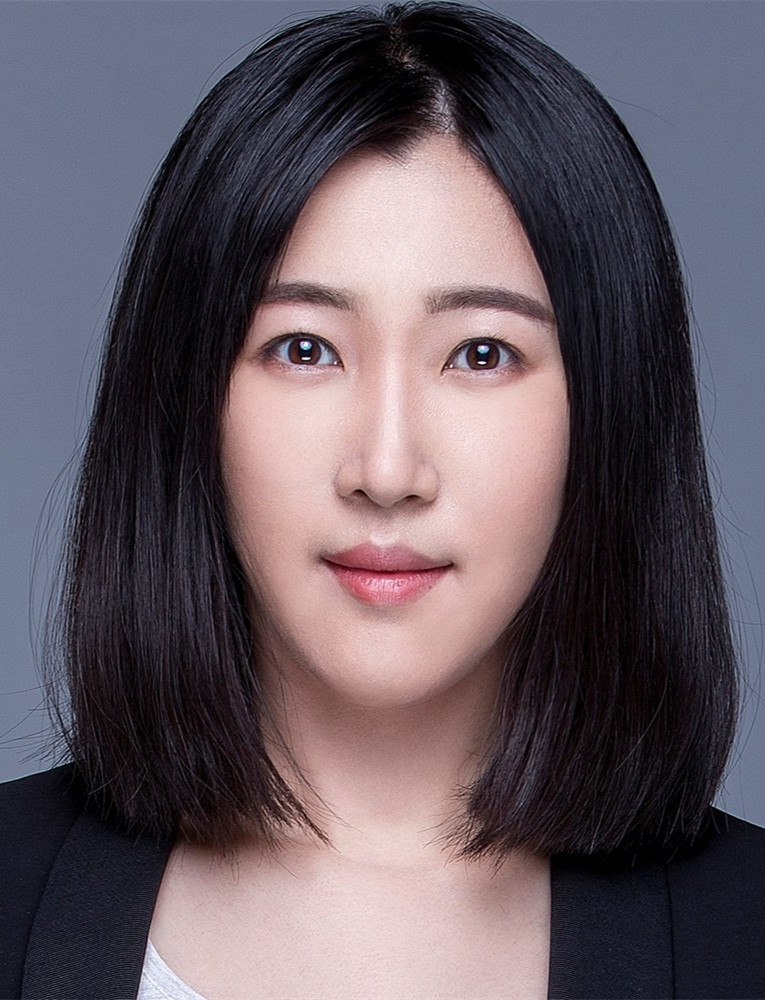
Wang Lu is an associate professor at the School of Data Science, Lingnan
University, Hong Kong, China.
Dr. Wang Lu is an associate professor at the College of Computer Science and
Software Engineering at Shenzhen University. She received her bachelor's degree
from the School of Information Science and Technology at Nankai University in
June 2009 and her Ph.D. from the Department of Computer Science and Engineering
at the Hong Kong University of Science and Technology (HKUST) in January 2014.
Following her doctorate, she continued at HKUST as a postdoctoral fellow until
February 2015. In June 2015, she was recruited as an overseas high-level talent
by the Shenzhen municipal government and currently serves as an associate
professor at Shenzhen University.
Her primary research interests lie in wireless networks and mobile computing,
with specific focus on the Internet of Things (IoT), artificial intelligence,
wearable computing, wireless perception computing, and wireless big data. Over
recent years, Dr. Wang has published more than 40 papers in major international
academic journals and conferences. Among these, 15 publications have appeared in
top-tier journals indexed by SCI, including the IEEE Transactions on Networking,
with nine of them being either first-authored or co-correspondent. She has also
presented over 30 papers at premier international conferences such as IEEE
INFOCOM and IEEE ICNP.
Copyright © 2026. AIBT All rights reserved.